Showing posts with label BASIC GRAMMAR EXERCISES. Show all posts

Friday, September 29, 2017

Adjectives and Comparison

John is 178 centimeters. David is 180. Smith is 195.
 John is tall. David is taller than John. Smith is the tallest of all.
The red car next to the tree is $50,000. The blue car in front of the house is $80,000. The black car over there is $150,000.

The red car is expensive. The blue car is more expensive than the red car. The black car is the most expensive of all.


1. My elder brother is three years older (old) than I am.

2. When I was a kid I always wanted to be  taller (tall) than he was.

3. Now I am the tallest (tall) in my family.

4. But my younger brother is  more intelligent (intelligent) than I am.

5. My elder brother played volleyball much better (good) than I did.

6. My younger brother drives more carefully (careful) than I do.

7. I am the  fastest (fast) driver in my family but the least careful.

8. Unfortunately, I have the  highest (high) number of speeding tickets.

9. I have the most expensive (expensive) but the least economical car.

10. All in all, I think I am the  smartest (smart) of all. What do you think? I am kidding.

Saturday, June 10, 2017

ENGLISH ADJECTIVES

WHAT IS AN ADJECTIVE?"

Simply put adjectives are descriptive words. Adjectives are used to describe or give information about things, ideas and people:nouns or pronouns.
For Example:-

The grey dog barked. (The adjective grey describes the noun "dog".)

The most common question an adjective might answer is "What kind of ...?"
The good news is that in English the form of an adjective does not change, once you have learnt it that's it and it does not matter if the noun being described is male or female, singular or plural, subject or object. Yay!
Some adjectives give us factual information about the noun - age, size colour etc (fact adjectives - can't be argued with).
Some adjectives show what somebody thinks about something or somebody - nice, horrid, beautiful etc (opinion adjectives - not everyone may agree).

There are different types of adjectives in the English language:

  • Numeric: six, one hundred and one etc.
  • Quantitative: more, all, some, half, more than enough etc.
  • Qualitative: colour, size, smell etc.
  • Possessive: my, his, their, your etc.
  • Interrogative: which, whose, what etc.
  • Demonstrative: this, that, those, these etc.
!Note - The articles a, an, and the are a special kind of adjective called articles, and the possessives my, our, your, and their are sometimes known as possessive adjectives.

Colour

Adjectives can be used to describe colour.
rainbow
blue, red, green, brown, yellow, black, white, etc.
For Example:
  • "The blue bag." or "The blue bags".

Opinion

Adjectives can be used to give your opinion about something.
thumb up thumb down
good, pretty, right, wrong, funny, light, happy, sad, full, soft, hard etc.
For Example:
  • He was a silly boy. / She was a silly girl.

Size

Adjectives can be used to describe size.
tall/short
big, small, little, long, tall, short, same as, etc.
For Example:
  • "The big man." or "The big woman".

Age

Adjectives can be used to describe age.
oldchild
For Example:
  • "He was an old man." or "She was an old woman."

Shape

Adjectives can be used to describe shape.
circlecube
round, circular, triangular, rectangular, square, oval, etc.
For Example:
  • "It was a square box." or "They were square boxes."

Origin

Adjectives can be used to describe origin.
germany france
For Example:-
  • "It was a German flag." or "They were German flags."

Material

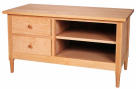
Adjectives can be used to identify the material something is made of.
tv
  • "A wooden cupboard." or "Wooden cupboards."
!Note - In English we often change nouns into adjectives.
For Example: glass - a glass vase / metal - a metal tray etc.

Distance

Adjectives can be used to describe distance.
  l -- o -- n -- g  / short
long, short, far, around, start, high, low, etc.
For Example:
  • "She went for a long walk." or "They went for lots of long walks."

Temperature

Adjectives can be used to describe temperature.
thermometer
cold, warm, hot, cool, etc.
For Example:
  • "It was a hot day" or "We eat ice cream on hot days."

Time

Adjectives can be used to describe time.
morning night
late, early, bed, nap, dinner, lunch, day, morning, night, etc.
or Example:
  • "She had an early start."

 Purpose

Adjectives can be used to describe purpose. (These adjectives often end with "-ing".)
For Example:
  • "She gave them a sleeping bag." or "She gave them sleeping bags."
!Note - Have you noticed how the adjective stays the same, whether it is describing a masculine, feminine, singular or plural noun? Nice huh?
When using more than one adjective to modify a noun, the adjectives may be separated by a conjunction (and) or by commas (,).
For Example:
  • "Her hair was long and blonde." or "She had long, blonde hair."
More examples:
AdjectivePrettySeriousFastQuiet
For Example:She is a pretty girl.He was a serious boy.It could be a fast car.They were quiet children.

Saturday, September 10, 2016

WHO - WHOM

There is often confusion about the use of who and whom. 
Who and whom are pronouns. 
Who is a subject pronoun, in the same way as 'he/she/they'. 
Whom is an object pronoun, in the same way as 'him/her/them'. 

In the sentence "John loves Julie." :
  • John is the subject of the verb 'love'
  • Julie is the object of John's affection.

Simple rule : If you can substitute 'he/they', use 'who'. 
 If you can substitute 'him/them', use 'whom'.


SubjectVerbObject
TomlovesJulie
WholovesJulie?
Tomloveswhom?

Subject
  • Who

    We use 'who' when it is the subject of a verb, that is, when it refers to the person who
    takes an action.
    • Julie played tennis. Julie is the subject of the verb 'to play'.
    • To find out the name of the player, we ask a question using 'who'.
      Who played tennis? Julie played tennis.
    • Who can also be used as the subject of a non-identifying clause:
      • There's Mr. Jones who bought the house next door.
Object
  • Whom
    We can use 'whom' as the object of a verb, but it is very formal and not often used in spoken English.
    • Formal English :     Whom did you see?
    • Everyday English :  Who did you see?
  • In formal English, whom is used directly after a preposition:
    • With whom did you play?
    • In informal conversational English, it is more usual to ask :
      • Who did you play with?
  • Whom is always used when it is preceded by quantifiers such as all of, both of, few of,many of, several of, etc. For example:
    • He addressed the spectators, most of whom remained seated.

Friday, September 9, 2016

WHETHER - IF

When to use 'whether' and 'if' in English.


'Whether' and 'if' are used as follows : 
  • To express alternatives :
    • I don't know whether/if I'll go to the party on Saturday (or not).
  • To report a question :
    • Are you going to the party?
      - She asked me whether/if I was going to the party (or not).
  • Only whether can be used in the following cases:

    • When followed by an infinitive :
      • I don't know whether to go to the party or not.
    • After prepositions :
      • It depends on whether I get home early or not.
    • When whether begins a clause which is the subject of a sentence.
      • Whether I go to the party or to the cinema makes no difference to me.
    • When followed directly by 'or not'
      • I'll be happy whether or not I go to the party.

Saturday, September 3, 2016

Grammar Exercise

Complete the sentences below with an appropriate word. 
    
       1.      You are welcome to come and stay with us __________ you like.     
 
    
       2.       I'd like to speak to __________ is in charge of sales.
 
    
       3.      __________ you do, don't forget to call me as soon as you arrive.
 
    
       4.      It comes in three colours;  choose __________ you prefer.
 
   
        5.      What do you want to do on Saturday?  I don't mind - ___________ you like!
 
    
        6.      He always makes friends quickly, ________________ he goes.
 
  
        7.      _______________  borrowed the dictionary should return it as quickly as possible.
 
  
        8.      The teacher says I don't participate enough, but ____________ I try to speak, someone interrupts me!
 
   
        9.      There is no entrance fee; you give __________ you can afford.
 
   
        10.    He says he's from Brookstown, ____________ that is.
 
Answers:


1) whenever   2) whoever   3) whatever   4) whichever   5) whatever   6) wherever   7) whoever   8) whenever   9) whatever   10) wherever

Wednesday, July 23, 2014

EXERCISE IN GRAMMAR-1

EXERCISE IN GRAMMAR-1

  In the following  sentences separate the Subject and the Predicate:

1. The cackling of geese saved Rome.
2.The boy stood on the burning  deck.
3. Tubai Cainwas a man of might.
4. Stone walls do not make a prison.
5. The singing of the birds delights us.
6.Miss Kitty was rude at the table one day.
7. He has a good memory.
8. Bad habits grow unconsciously.
9. The earth revolves round the sun.
10. Nature is the best physician.
11.Edison invented the photography.
12. The sea hath many thousand sands.
13. We cannot pump the ocean dry.
14. We cannot garments never fit well.
15. the early bird catches the worm.
16. All matter is indestructible.
17. Islamabad is the capital of Pakistan.
18.We should profit by experience .
19. All roads lead to Rome.
20. A guilty conscience needs no excuse.
21. The beautiful rainbow soon faded away.
22. No man can serve two masters.
23. A sick room should be well aired.
24. The dewdrops glitter in the sunshine.
25. I shot an arrow into the air.
26. A barking sound the shepherd hears.

27.On the top of the hill lives a hermit.

THE SENTENCE

THE SENTENCE
CHAPTER 1
1. When we speak or write we use words. We generally use these words in groups; as, Little Jack Horner sat in a corner.
A group of words like this, which makes complete sense, is called a Sentence.

Kinds of Sentences
2. Sentences are of four kinds:
(1) Those which make statements or assertions; as,
 (2) Those which as questions; as
Where do you live?
(3) Those which express commands, requests, or entreaties; as,
Be quiet.
Have mercy upon us.
(4) Those which express strong feelings; as,
How could the nights !
 A sentence that makes a statement or assertion is called a Declarative or Assertive  sentence.
A sentence that asks question is called an Interrogative sentence.
A sentence that expresses a command or an entreaty is called an Imperative sentence.
A sentence that expresses strong feeling is called an Exclamatory sentence.


Sunday, August 4, 2013

Past Continuous Tense

In the Past Continuous tense, the action was ongoing till a certain time in the past.This tense is used to talk about an action at a particular time in the past.

POSITIVE STATEMENTS

SUBJECT
WAS / WERE
VERB + ing
REST OF THE SENTENCE
I
was
sleeping
at 11 p.m. last night.
You
were
sleeping
at 11 p.m. last night.
He
was
sleeping
at 11 p.m. last night.

Saturday, August 3, 2013

Past Tense - Simple Past Tense

In the Simple Past tense, the action is simply mentioned and understood to have taken place in the past. The action started and ended sometime in the past but the time may or may not be mentioned.

POSITIVE STATEMENTS

SUBJECT
VERB (in past form)
REST OF THE SENTENCE
I
played
cricket yesterday.
You
played
cricket yesterday.
He
played
cricket yesterday.

Friday, August 2, 2013

Tenses Part III - Present Perfect Tense

In the Present Perfect tense, the action is complete or has ended and hence termed Perfect. The exact time when the action happened is not important and hence, it is not mentioned in this tense.

POSITIVE STATEMENTS
SUBJECT
HAVE / HAS
VERB (past participle)
REST OF THE SENTENCE
I
have
seen
this movie.
You
have
seen
this movie.
He
has
seen
this movie.
Mohan
has
seen
this movie.
The boy
has
seen
this movie.

Thursday, August 1, 2013

Tenses Part II - Present Continuous Tense Tweet

In the Present Continuous tense, the action is on-going/ still going on and hence continuous. The present continuous tense is used to talk about actions that are happening at this current moment.

POSITIVE STATEMENTS

SUBJECT
AM / ARE / IS
VERB + ing
REST OF THE SENTENCE
I
am
watching
television.
You
are
watching
television.
He
is
watching
television.
Mohan
is
watching
television
The boy
is
watching
television.
She
is
watching
television.
Pooja
is
watching
television.

Wednesday, July 31, 2013

Tenses Part I - Simple Present Tense

The concept of time can be split into:
  1. The Present - What you are currently doing.   
I eat, I am eating                                  
  1. The Past - What you did some time back.  
I ate, I was eating
  1. The Future - What you will do later.  
I will eat, I will be eating                                             
In the English language, tenses play an important role in sentence formation. 
The tense of a verb shows the time of an event or action.
 There are four types of tenses. Simple, Perfect, Continuous and Present Perfect Continuous and each of these has a present, past and future form. 
SIMPLE PRESENT TENSE

Tuesday, July 30, 2013

Prepositions Part III


List of Prepositions

Prepositions can only be learnt by memory; unfortunately there is no method or particular way to recognize and learn them. To help you with memorizing the different prepositions, here is a list of common prepositions.

Simple Prepositions 
For
By
At
On
Of
Off
To

Monday, July 29, 2013

Prepositions Part II


Kinds of Prepositions -

Simple Prepositions   
  - These prepositions are constructed by only one word like -
  - On, at, about, with, after, for, etc. 
  - He found the book about dogs on the table, in the bedroom.

Double Prepositions

Sunday, July 28, 2013

Prepositions Part I

Prepositions are the words which are used to connect the different nouns, pronouns and phrases in a sentence. It functions to introduce or precede the word or phrase to be connected, called the object of the preposition.
The preposition usually indicates the relation between the words it is connecting. It tells whether the words are connected in actual space or a place, or related through time or are they part of a thought or process.

Friday, July 19, 2013

Adjectives Part II

Adjectives Part I <-- click here 

4. Demonstrative Adjectives - These adjectives are used to point out or indicate a particular noun or pronoun using the adjectives - This, That, These andThose. 
o   That bag belongs to Neil. 
o   Try using this paintbrush in art class.
o   I really like those shoes.
o   These flowers are lovely. 

5. Interrogative Adjectives - These adjectives are used to ask questions about nouns or in relation to nouns, they are - Where, What, Which and Whose.
o   Where did he say he was going? 
o   What assignment did I miss out on?
o   Which is your favorite author?
o   Whose pen is this? 

In some instances, we find that we need to use more than one adjective to describe a noun in a satisfactory manner. In these cases, commas are used to separate the adjectives but some series of adjectives do not require a comma. Therefore, we need to know the difference between Coordinate and Non-coordinate Adjectives -

Thursday, July 18, 2013

Adjectives Part I

Adjectives are words that are used to describe (what kind of?) nouns and pronouns and to quantify (how much of?) and identify (which one?) them. In a nutshell, Adjectives are what define nouns and give them characteristics to differentiate them from other nouns. For example:
He was wearing a blue shirt.
Here ‘blue’ is an adjective as it is describing the noun ‘shirt’ by answering the question ‘what kind of shirt?’

There are seven rooms in the house.
Here ‘Seven’ is also an adjective as it’s telling the quantity/the number of the noun ‘rooms’, answering the question ‘how many rooms?’. 

There are different types of adjectives based upon their effect on a noun and what do they tell about the noun. There are five categories of adjectives

Present Perfect Continuous Tense

In the Present Perfect Continuous tense, the action has been taking place for some time and is still ongoing. The duration for which the action has been going on is usually mentioned in the present perfect continuous tense.

POSITIVE STATEMENTS
SUBJECT
HAVE BEEN/ HAS BEEN
VERB + ing
REST OF THE SENTENCE
I
have been
waiting
for an hour.
You
have been
waiting
for an hour.
He
has been
waiting
for an hour.
Mohan
has been
waiting
for an hour.